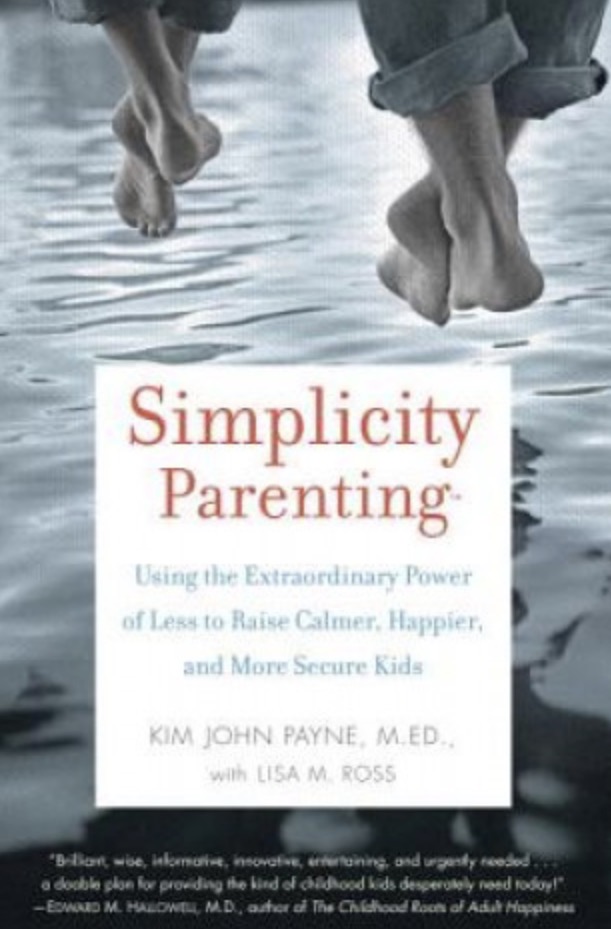
Simplicity Parenting, first published in 2009, is an approachable and compassionate handbook for families who may feel overwhelmed by the logistics of family life, those struggling with big feelings or challenging behaviours, or those simply seeking practical change.
Short take: The book focuses on helping families implement small, achievable changes in the home. It encourages conscious consideration of ones priorities and values, helps parents simplify their schedules, and create rhythm and predictability in their routines. In doing so, it creates the physical and psychological space needed for connection, creativity, and free play. I found this book to be insightful, encouraging, and non-judgmental.
Parenting style
- The parenting style endorsed is authoritative. It encourages a balance of clear, consistent boundaries with warm responsiveness. The author rejects both permissive and harsher authoritarian styles.
- Payne advocates parental leadership that provides structure and guidance while respecting children’s autonomy and developmental needs. It is attachment-based, focusing on secure relationships, emotional attunement, and calm presence.
Key themes
- Cumulative stress reaction: The book delves into the concept of cumulative stress reaction- the idea that children’s brains are not designed to deal with the fast paced, modern, digital world. This environment can lead to sensory overstimulation and attentional overload, leading to hyper-vigilance, attention difficulties, impaired emotion regulation, low empathy, and issues with physical and emotional health.
- Rhythm and predictability: Payne argues that predictable routines and family rituals create a sense of safety for children and reduce everyday anxiety, and can help to reduce the impact of cumulative stressors. This can include giving children a preview of the day.
- Environment shapes behaviour: Payne gives numerous examples to show that simplifying physical and social environments can help children regulate emotions and behaviour more easily. His approach focuses on reducing physical clutter in the home, which he argues can help children think clearly, focus their attention and regulate their emotions.
- Less is more: A central theme is decluttering schedules, toys, and extracurriculars so children can focus, lean into creativity, and harness their natural curiosity and learning.
- Free time, free play: Paine is a strong advocate of ample, protected time for free play, rest, and boredom, asserting these are essential for healthy development.
- Connection over correction: The book stresses the importance of relationship-building and gentle limits, accurately stating that secure connection reduces the need for frequent discipline.
- Gentle transitions: Practical strategies are offered for slowing down and supporting children through major life changes like moving home or schools, starting new activities, family loss or separation.
Overall impression:
- In this easy to read book, Kim John Paine offers compassionate and practical advice to reduce overwhelm in family life. His approach is simple – by reducing clutter in the home, simplifying schedules, and allowing enough free time for connection, creativity and free play, parents can reduce their children’s stress responses. This, in turn, can improve emotional regulation, attentional capacity, family relationships, and overall physical and emotional wellbeing.
- Paine discusses the Cumulative Stress Reaction- a state of chronic hyperarousal (sympathetic nervous system activation) that occurs due to modern environmental overstimulation and attentional overload. He offers a range of strategies to reduce the likelihood that children are impacted by this stress response.
- Some of the strategies discussed include: limiting over-scheduling; creating predictable daily rhythms and routines; implementing a balance of structured activities and unstructured free time; limiting access to screens; and adopting a parenting style that balances guidance and clear boundaries with calm presence and emotional support.
- Overall, I found this book an insightful and interesting read. I recommend it to all parents, grandparents and carers who are supporting toddlers through to teens.



 Child Psychology Book Lady
Leave a comment