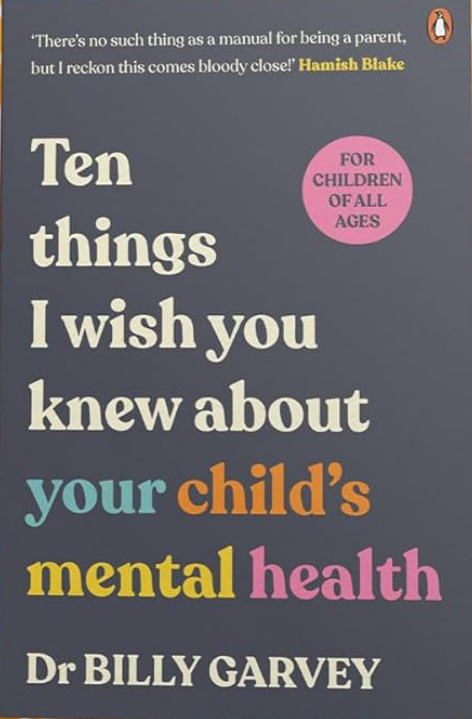
In this succinct, easy-to-read book, developmental paediatrician, Dr Billy Garvey, provides an evidence-based and compassionate approach to understanding the complex world of children’s mental health.
Short take: From the first days with a newborn to parenting a teen, Garvey covers broad terrain in this book and offers hope, sensible advice and practice strategies for parents. He discusses the importance of attachment, parental modelling and early intervention in promoting long term stability of mental health. Although not revolutionary in his thesis, this book offers plenty of practical advice and information for parents. A good introduction to an uncontroversially beneficial parenting approach that prioritises connection and understanding over discipline and behavioural control.
Parenting Approach:
- Garvey’s approach is attachment-based and authoritative, encouraging parents to validate and accept feelings as the first step to addressing emotional or behavioural difficulties. He says that misbehaviours are “flares” sent out by a child or teen signalling a need for connection or help. Listening to these flares is key to correcting behaviour, promoting stable self-esteem and fostering positive mental health.
- Garvey describes a range of emotion coaching strategies to help parents connect and understand their child, such as labelling, validating and accepting feelings, using body language and facial expressions, and relying on positive reinforcement over punishment.
Key Themes:
- The role of attachment: Garvey stresses the importance of early attachment, particularly in the first year of a child’s life. He provides strategies and tips for how parents can cultivate secure attachment with their infant.
- Emotion regulation: Garvey outlines how co-regulation with a parent is a necessary precursor to self-regulation in children. This involves parents validating and accepting all feelings without punishment or shame. Understanding that young children cannot regulate their feelings without the help of a parent, and that even teens need co-regulation at times, is key to having developmentally realistic expectations and using appropriate strategies. A parent’s ability and willingness to work on their own emotional regulation so that they can respond in a calm, considered way, is a significant part of this process.
- Social skills, Theory of Mind and empathy: Garvey says that the blueprint for prosocial behaviour and empathy is laid down in the first year of a babies life through processes of imitation (eg. facial expressions, sounds) and attunement (eg. responding to an infant’s cries). As children get older, they learn social skills through playful interactions with peers and adults. Theory of Mind, the ability to perspective-take about the thoughts and feelings of others, is a social cognitive skill that all children must develop, alongside empathy, respect, kindness and gratitude. Signs a child may need help with social skills include bullying, isolation, a lack of deep friendships or frequent conflict.
- Early intervention: Garvey urges parents to seek help from developmental teams (paediatricians, psychologists, occupational therapists, speech pathologists) at the earliest signs of difficulty, stating that this gives children the best opportunity for positive outcomes. He outlines evidence-based strategies that can be used to treat common conditions of childhood, such as cognitive behavioural therapy for anxiety.
- Holistic health. Children’s mental health must be seen holistically, connected to their sleep, diet, social relationships, physical health and any spiritual elements in a child’s life. Understanding and assessing these factors may provide keys to understanding behavioural or emotional difficulties that arise.
Overall Impression:
- ‘Ten things I wish you knew about your child’s mental health’ provides a concise, easy-to-digest summary of the factors contributing to children’s mental health. Dr Garvey’s approach focuses on attachment, emotional attunement, empathy and understanding. He urges parents to look past overt behaviours to understand the root causes of emotional and behavioural difficulties, and to seek help as early as they can.
- Garvey suggests a range of ways parents can cultivate connection, security and stability with their children. For babies, this involves responding to their cries, imitation and mimicking, parental presence, non-verbal communication and touch. For older children, things such as praising effort over achievement, using positive reinforcement rather than punishment, and focusing on strengths alongside areas of weakness. One particularly nice suggestion is the idea of family ‘sanctuaries’ – protected times with parents or siblings that happen unconditionally, no matter what external changes, stressors or events are occurring in a child’s life (eg. A shared activity or ritual, time together).
- Overall, I enjoyed this book and found the themes and advice uncontroversial. The author, an Australian paediatrician, summarises a parenting approach that prioritises connection, emotional validation and containment, and encourages help seeking and early intervention. This book didn’t exactly excite me nor seem to add much to the vast attachment and emotion coaching literature that has been building over the past two decades. Nevertheless, the advice is simple, practical, and provides an excellent starting point for parents new to this way of thinking, those wanting a refresher, and anyone keen to nurture their child’s mental health through connection and relationship building.





 Child Psychology Book Lady
Leave a comment