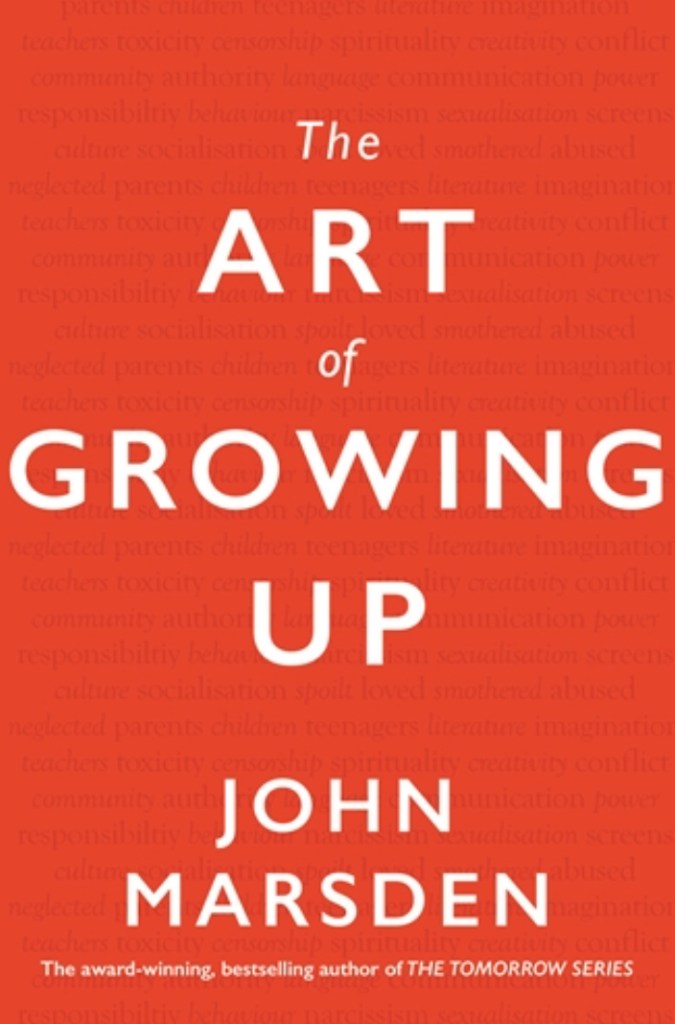
In ‘The Art of Growing Up’, author and alternative school principal John Marsden brings his experience working with children and teens to a unique book about raising and educating kids.
Short take: Honest and unapologetic in his views, Marsden offers up a bold and eclectic thesis that blends elements of traditional and more progressive parenting. He uses literary fiction and a psychoanalytic frame to discuss important truths about growing up. Although I didn’t agree with many of Marsden’s parenting suggestions, I found his use of fictional stories, discussion of spirituality, and emphasis on looking deeper than children’s overt behaviours interesting and enlightening.
Parenting and Educational Approach:
- The parenting approach described is closest to an authoritative style, in that it encourages responsive and supportive parenting while setting firm boundaries. In parts, Marsden’s approach does border on authoritarian, emphasising the role of the parent as respected authority figure. Marsden speaks out against permissive or idealising parenting, in which parents fail to see their children in a balanced light.
- Marsden is the principal and founder of an alternative school in Australia, which is based on principles of hands-on learning, freedom to experience and explore, nurturing guidance, and opportunities to “take risks while taking care”.
Key Themes:
- Educational Reform: As the founder of an alternative school and former headmaster of a mainstream high school, Marsden says we need schools that focus on creativity, critical thinking, independence, and healthy relationship development with peers and adults. He argues that mainstream schools do not provide suitable environments for children to learn and grow in a holistic sense.
- Not Idealising Children. Marsden speaks out against parents who idealise their children to the point of being unable to see any faults or flaws, which he says gets in the way of healthy individuation and growth. His approach to parenting emphasises independence, resilience, and self-esteem, as well as the ability to recognise the darker aspects of children’s psyches and help them work through these.
- Personal Responsibility and Self-Reflection. Marsden’s speaks at length about parents who fail to take responsibility for their children’s behaviour and wellbeing, placing undue responsibility and blame on schools who they expect to act as psychologist, mentor, speech therapist, sexual educator and teacher. He argues for a shift in responsibility back to parents and families.
- Spirituality and Stories: Marsden highlights the importance of a spiritual dimension in children’s lives, which he says has been lost. He says much can be gained when children are in touch with the wonders and vast unknown of the universe. Stories and folklore can provide important moral lessons for children, whether these be passed on through religious systems, cultural customs, or fictional tales. Marsden argues that atheist societies cannot fully instil the same degree of empathy, compassion and thoughtfulness that spiritual societies offer.
Overall Impression:
- In the ‘The Art of Growing Up’, John Marsden offers his views on raising and educating kids. He articulates important truths about the human condition that are critical to supporting children’s holistic development.
- One such truth is that life involves suffering, and that children will experience periods of sadness, grief, anger and confusion in addition to happiness and joy. Rather than protecting children from these feelings or sheltering them from the realities of the world, he says they must be supported to understand, accept and manage the inevitable ebb and flow of feelings and experiences that are a part of life.
- Another truth, stemming from Marsden’s apparent classical psychoanalytic views, is that all children are born with impulses and drives (eg., violent, jealous or sexualised thoughts, greed, selfishness) which he refers to as the “shadow”. The job of parents is to recognise, accept, and respond thoughtfully when children act out certain behaviours rather than responding with disgust, anger or denial. Self-reflection on the part of the parent is a notable part of this process.
- An interesting aspect of this book is Marsden’s use of literary fiction to develop and explain his thesis. He says that stories, such as Peter Pan, contain powerful messages and themes that can help both children and adults better understand the more complex and covert psychological, emotional and social elements of development.
- I did not agree with many of Marsden’s parenting suggestions, which seem to reflect the age in which he was raised and emphasise the parent as a respected authority figure (eg. Saying that parents who apologise to their children are “grovelling”). In addition, his writing came across as combative at times, reflecting someone who is (perhaps understandably) fed up with school systems and tired of parents who place undue responsibility on schools for their child’s overall wellbeing and development.
- Overall, this is a book that offers genuinely new insights and ways of thinking about raising kids, written by an author who clearly understands child development and human psychology more broadly. Although I will not adopt many of Marsden’s direct parenting suggestions, I respect this author and found the book a surprising and enlightening read.


 Child Psychology Book Lady
Leave a comment