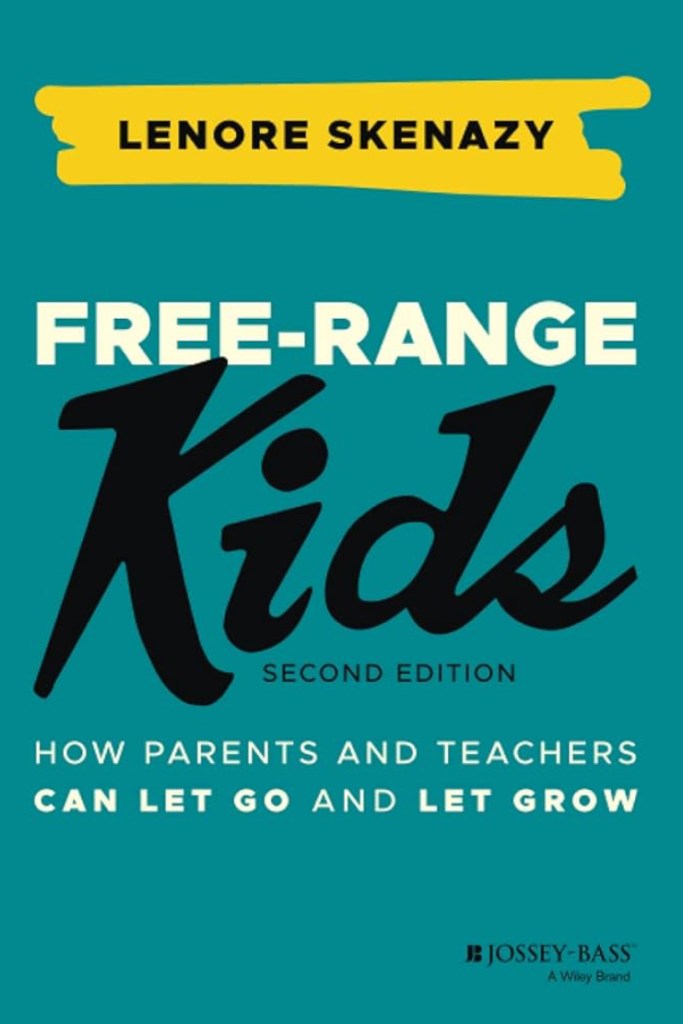
Contrasting starkly with the overprotective ‘Helicopter’ style of parenting that took hold in the 90s, ‘Free-Range Kids’ encourages parents to take a step back to allow kids to take risks and explore the world independently.
Short take: This book argues that by letting go of fear and overprotectiveness, parents can cultivate more autonomy, responsibility, and connection with their kids, in turn fostering resilience and a more balanced approach to family life. I loved elements of this book, as well as the spirit of trusting families to make decisions for their own children based on their unique circumstances and communities.
Parenting Approach:
- The key principles of ‘Free-Range’ parenting are autonomy, trust, independence and a hands-off parenting style.
- Critics have described the approach as neglectful, while more generous descriptors would be democratic and laissez-faire.
Key Themes:
- Independence: Skenazy advocates for allowing children the freedom to explore and experience the world on their own, which she says promotes independence, self-reliance, and resilience. Examples include allowing children to take public transport, walk to school, or play in the park without parental supervision. These freedoms are given depending on the child’s developmental level, as well as the community in which they live.
- Resilience-building: The author shares anecdotes of children who have developed resilience by overcoming obstacles, such as getting lost and finding their way home or resolving conflicts with peers without adult intervention. These experiences, she argues, are essential for building confidence and adaptability.
- Realistic Risk Assessment: The book challenges the culture of fear surrounding child safety and encourages parents to assess risks for themselves using common-sense, taking into consideration the particularities of their own neighbourhoods.
- The Role of Community: Skenazy emphasises the role of communities in supporting this style of parenting, highlighting the importance of neighbourhood watch and collective responsibility for children’s safety.
Overall Impression:
- ‘Free-Range Kids’ challenges the culture of fear and overprotectiveness that has gripped some subsets of Western parenting since the 1990s. The book advocates for a more relaxed and trusting approach to raising kids, exploring themes of independence, risk-taking, and community. It urges parents to embrace a hands-off style that prioritises autonomy over adult intervention.
- I liked elements of this book, such as the focus on age-appropriate freedoms that encourage physical activity, time outdoors, community involvement, and the inclusion of children in day-to-day life. I didn’t necessarily agree with all of the parenting decisions Skenazy made, however, I appreciated the spirit of trusting parents to make individualised risk assessments depending on their unique circumstances, children, and communities. In my opinion, this is a better approach than advocating for blanket (one-size-fits-all) rules that may unnecessarily limit children’s freedoms and promote a culture of judgement among parents who believe there is a right vs. wrong way.
- I had a minor personal issue with the tone of Skenazy’s writing. While I found the book funny to start, this wore thin after a while and her tone became slightly petulant, particularly when responding to criticisms she has faced. This made it a less enjoyable read than it could have been.
- Irrespective of my personal views, the book has received criticism for concerns about safety, practicality, inclusivity, and the potential impact on parental attitudes and behaviours. Critics argue that it downplays legitimate safety concerns, such as in neighbourhoods with high crime rates, and could expose children to unnecessary risks. Privilege and socioeconomic factors have also been discussed, with the approach said to be impractical for families from disadvantaged backgrounds and those with limited access to resources, such as safe outdoor spaces.
- Overall, I think this book is a valuable resource if used in conjunction with other parenting literature and only when adopting elements that feel right for your family. Perhaps an optimal outcome from reading would be prompting discussion among parents and families about how to balance autonomy and support in your homes.



 Child Psychology Book Lady
Leave a comment