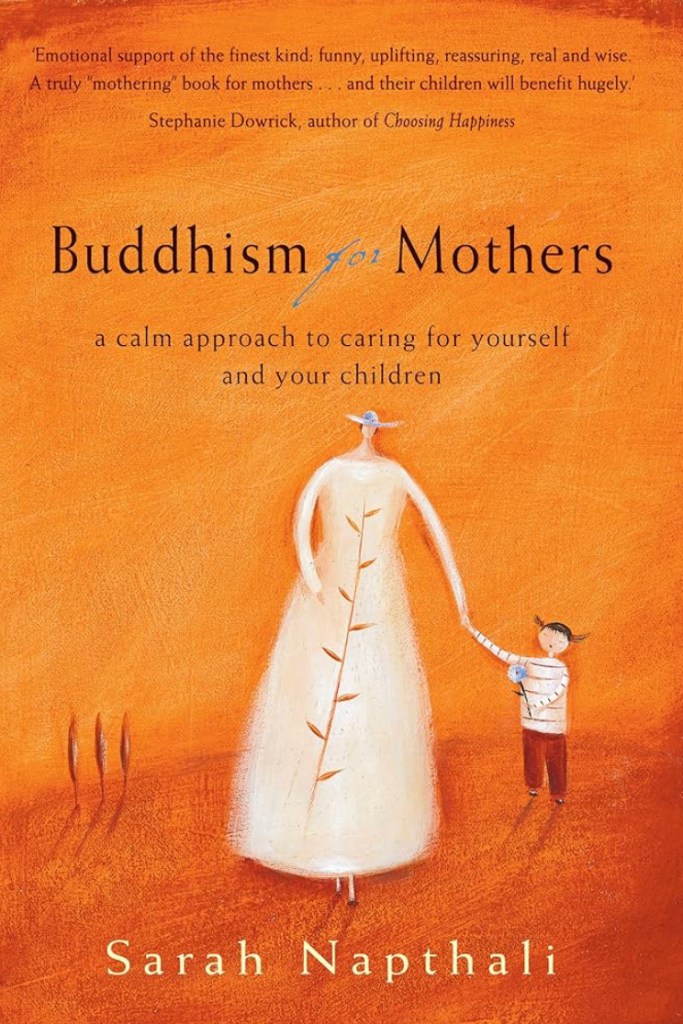
Buddhism for Mothers by Sarah Napthali is one of my all time favourite books when it comes to parenting and raising kids. It offers a thoughtful and refreshing approach, exploring how Buddhist principles can be applied to the challenges of motherhood. Like Napthali, I use the term ‘mother’ in this review to refer to anyone who is a carer of a child.
Short take: Napthali blends Buddhist philosophy with practical parenting advice, offering a unique perspective on navigating the ups and downs of motherhood. One of the things I love most about this book is her honesty in sharing moments of “good enough” parenting, an approach that is pragmatic, sensible and achievable for parents.
- Parenting approach
- The book encourages a gentle and compassionate approach to parenting, emphasizing the importance of building strong connections with children based on understanding and empathy.
- The parenting style advocated for is authoritative. The approach balances warmth and nurturance with clear boundaries and expectations. It promotes a balance of discipline and connection, laying the foundations for healthy parent-child relationships.
- There is an emphasis on self-insight and self-development for parents, urging mothers to cultivate awareness and intentionality in their interactions with their children.
- Key Themes:
- Mindfulness: The book emphasizes the importance of mindfulness in parenting, encouraging mothers to be present in each moment with their children. At the same time, Napthali is realistic in what she expects herself and others, providing honest and candid recollections of moments when she has not been mindful or patient as a mother. This emphasises the goal of “good enough” parenting, as well as the importance of acceptance and self-compassion when mother’s don’t respond exactly how they would have liked.
- Self-Compassion: Napthali advocates for self-compassion, urging mothers to be kind to themselves as they navigate the complexities of raising children. Again, she offers examples from her own life giving the reader insight into how the principles she discusses in the book can be applied.
- Parental Self-Regulation and Development: A central theme of the book is the importance of parental emotion regulation. Napthali suggests that by focusing on their own personal growth and well-being, parents can create a supportive environment for their children to thrive. Here, she alludes to the importance of self-regulation for effective co-regulation in children. She suggests that working to develop greater personal insight and awareness is more than half of the work in parenting kids effectively, a view that I share wholeheartedly.
- Intuitive trust in a mother’s knowing: Napthali steers away from offering directive statements about what parents should say or do. This is somewhat rare in modern parenting paradigms, and in my opinion and experience, is extremely important in building up a mother’s ability to parent confidently over the longer term.
- Overall impression:
- The book ‘Buddhism for Mothers’ by Sarah Napthali blends a spiritual wisdom not found in other modern approaches with insights from psychology and child development. It provides practical guidance for mothers seeking to cultivate mindfulness, self-compassion, and emotional regulation in their day-to-day lives with their kids. Napthali’s emphasis on parental self-regulation and development serves as a powerful reminder that by nurturing their own well-being, mothers can better support the growth and development of their children.




 Child Psychology Book Lady
Leave a comment